 ChefBook
A dinner rotation is a fixed list of meals you cycle through, so “what’s for dinner?” becomes “what’s next on the list?”. It sounds boring. In practice it is the opposite: because the planning is done, you have the energy to try something new once a week instead of panic-cooking pasta at 7pm.
Most families already have an unofficial rotation. Building a deliberate one takes about an hour and pays back every week.
What a dinner rotation is (and isn’t)
A rotation is not eating exactly the same seven meals every week. It is:
- A list of 14–30 dinners your household reliably likes,
- organised so you can pick a week’s worth in minutes,
- with built-in variety, usually through theme nights or a rotating cycle.
Two common styles:
| Style | How it works | Best for |
|---|---|---|
| Theme nights | Each weekday has a category (Taco Tuesday, Pasta Thursday); you pick a dish within it | Families, picky eaters |
| Fixed cycle | A 2-, 3- or 4-week list that repeats in order | People who want zero decisions |
You can mix them: theme nights on weekdays, freestyle at the weekend.
Step 1: List the dinners you already cook
Don’t start with new recipes. Open your camera roll, your bookmarks and your memory, and write down every dinner your household has eaten and liked in the last two months. Most people get to 15–25 quickly.
Then mark each one:
- Quick (under 30 minutes) or slow (weekend or batch).
- Freezes well or not.
- Everyone likes it or one person tolerates it.
Drop anything nobody would miss.
Step 2: Group them into categories
Put each dinner into a category. Common ones:
- Pasta and noodles
- Rice dishes and curries
- Soups and stews
- Tacos, wraps and sandwiches
- Traybakes and roasts
- Eggs and breakfast-for-dinner
- Fish
- Meat-free
Look at the gaps. If you have nine pasta dishes and one fish dish, the rotation will feel samey. That is where you add new recipes, one or two at a time.
Step 3: Assign theme nights
Match categories to days based on your week, not on alliteration:
| Day | Theme | Why |
|---|---|---|
| Monday | Soup or stew | Batch-cooked on Sunday |
| Tuesday | Tacos and wraps | Fast after a long day |
| Wednesday | Meat-free | Cheaper mid-week |
| Thursday | Pasta or noodles | 20 minutes |
| Friday | Pizza or fakeaway | End-of-week treat |
| Saturday | Something new | Time to experiment |
| Sunday | Roast or traybake | Leftovers feed Monday |
Within each theme you have three to five options, so Tuesday can be chicken tacos, bean burritos or pulled-pork wraps without anyone having to think hard.
Step 4: Keep the rotation somewhere you’ll see it
A rotation stuck in your head doesn’t survive a busy week. Options:
- A list on the fridge with categories and dishes.
- A spreadsheet with columns for theme, dish and last cooked date.
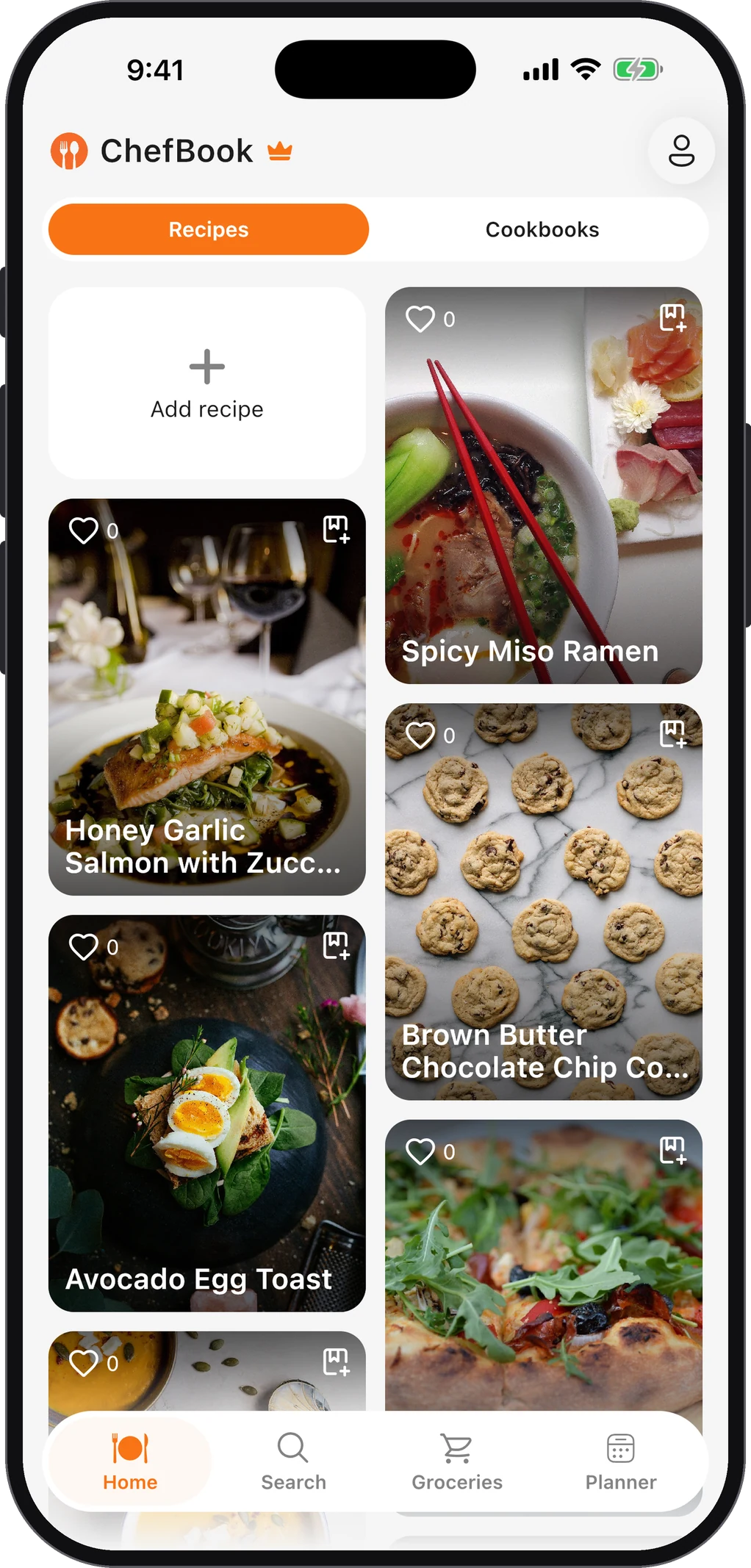
- A recipe app with collections. In ChefBook you can make a cookbook for each theme (“Tuesday tacos”, “Meat-free Wednesday”), so the recipe itself is one tap away, not just its name. The guide on organizing recipes digitally covers cookbooks.
Then each Sunday, take one dish from each theme and drop it into the weekly meal planner. In ChefBook, one tap sends all their ingredients to the grocery list.
Step 5: Stop the rotation getting stale
Rotations fail when they become a rut. Three habits prevent that:
- One new recipe a week. Saturday is the test slot. If everyone likes it, it joins the rotation; if not, it doesn’t come back.
- Retire one dish a month. If something keeps getting skipped, remove it.
- Rotate seasonally. Swap soups and stews for salads and grills in summer.
New recipes are easiest to find from places you already browse: save them from Instagram, TikTok, food blogs or YouTube as you go, and put them into the “to try” pile.
When the rotation doesn’t cover tonight
Even a good rotation has nights when the planned dish just isn’t happening: the chicken was used for something else, or there is no energy. Two fallbacks:
- A “pantry” category of dinners made entirely from cupboard and freezer staples — see our pantry staples list.
- Decide in three questions — the guide what should I make for dinner walks through it.
For the mechanics of planning the week around your rotation, see meal prep for beginners.
Questions people ask
What is a dinner rotation?
A list of dinners your household likes that you cycle through, usually organised by theme nights or a repeating 2–4 week schedule, so you don’t decide from scratch every night.
How many meals should be in a dinner rotation?
Fourteen to thirty is a good range: enough for two to four weeks without a repeat, small enough to remember and shop for.
What are good theme nights for dinner?
Common ones are Meat-free Monday, Taco Tuesday, Stir-fry or noodle night, Pasta night, Pizza Friday, Soup night and a Sunday roast or traybake. Pick themes that match how busy each day is.
How do you keep a meal rotation from getting boring?
Add one new recipe a week, retire dishes nobody misses, and swap categories with the seasons.
Keep every recipe in one place
ChefBook is free on the App Store and Google Play — save your first recipe today.
phone camera