 ChefBook
Most pantry staples lists are written as if you were stocking a shop. This one is shorter, and every item is there because it turns into dinner with very little help. Tick what you already have, add the gaps to your next shop, and keep it topped up rather than starting from zero each week.
How to use this list
Don’t buy everything at once. Start with the core items in each category — the ones you’ll use weekly — and add the extras as recipes call for them. A staple you never cook with is just clutter with a best-by date.
Grains, pasta and starches
Core: dried pasta (one long, one short shape), rice, rolled oats, plain flour.
Extras: couscous, noodles (egg or rice), quinoa, bread or tortillas in the freezer, potatoes.
What they unlock: the base of almost every quick dinner. Pasta plus a tin of tomatoes and garlic is a meal; rice plus eggs and frozen peas is fried rice; flour thickens sauces and makes pancakes.
Tins and jars
Core: chopped or whole tomatoes, chickpeas, one other bean (black, kidney or cannellini), coconut milk, stock cubes or bouillon.
Extras: tuna or sardines, tomato paste, lentils (tinned or dried), sweetcorn, olives, roasted peppers.
What they unlock: soups, curries, chilli, stews and shakshuka. Tins are the reason you can cook a proper meal on a day you didn’t shop.
Oils, vinegars and sauces
Core: olive oil, a neutral oil for high heat, soy sauce, one vinegar (red wine or cider).
Extras: sesame oil, balsamic vinegar, hot sauce, Dijon mustard, honey, fish sauce, Worcestershire sauce.
What they unlock: dressings, marinades, stir-fries and pan sauces. A teaspoon of acid or a splash of soy is often the difference between “fine” and “good”.
Herbs and spices
Core: salt, black pepper, chilli flakes, ground cumin, paprika, dried oregano, garlic (fresh, or granulated as backup).
Extras: ground coriander, cinnamon, curry powder or garam masala, smoked paprika, bay leaves, turmeric.
What they unlock: whole cuisines. Cumin and paprika get you most of the way to tacos and chilli; curry powder and coconut milk make a curry from whatever vegetables you have.
Buy spices in small amounts — ground spices lose their flavour long before they spoil.
Baking
Core: baking powder, baking soda, granulated sugar, brown sugar, vanilla extract.
Extras: cocoa powder, chocolate chips, cornstarch, yeast, powdered sugar.
What they unlock: weekend pancakes, a batch of muffins for overripe bananas, and thickening for gravy (cornstarch). If you’re out of one of these mid-recipe, see the ingredient substitutions that work.
Fridge staples
Core: eggs, butter, milk (or a plant milk), a hard cheese such as Parmesan or Cheddar, onions, lemons.
Extras: plain yogurt, carrots, celery, ginger, a jar of pesto or curry paste.
What they unlock: eggs alone make breakfast, lunch or dinner; onions start most savoury dishes; a lemon fixes flat food.
Freezer staples
Core: frozen peas, frozen spinach, one frozen protein (chicken thighs, fish fillets or mince).
Extras: frozen berries, frozen mixed vegetables, a loaf of sliced bread, homemade stock, cooked rice in portions.
What they unlock: the “nothing in the fridge” night. Frozen vegetables are picked and frozen quickly and are a perfectly good way to keep vegetables in the house.
Turning the pantry into dinner
A full pantry only helps if you can see what it makes. The usual failure isn’t a lack of ingredients — it’s standing in front of them with no idea.
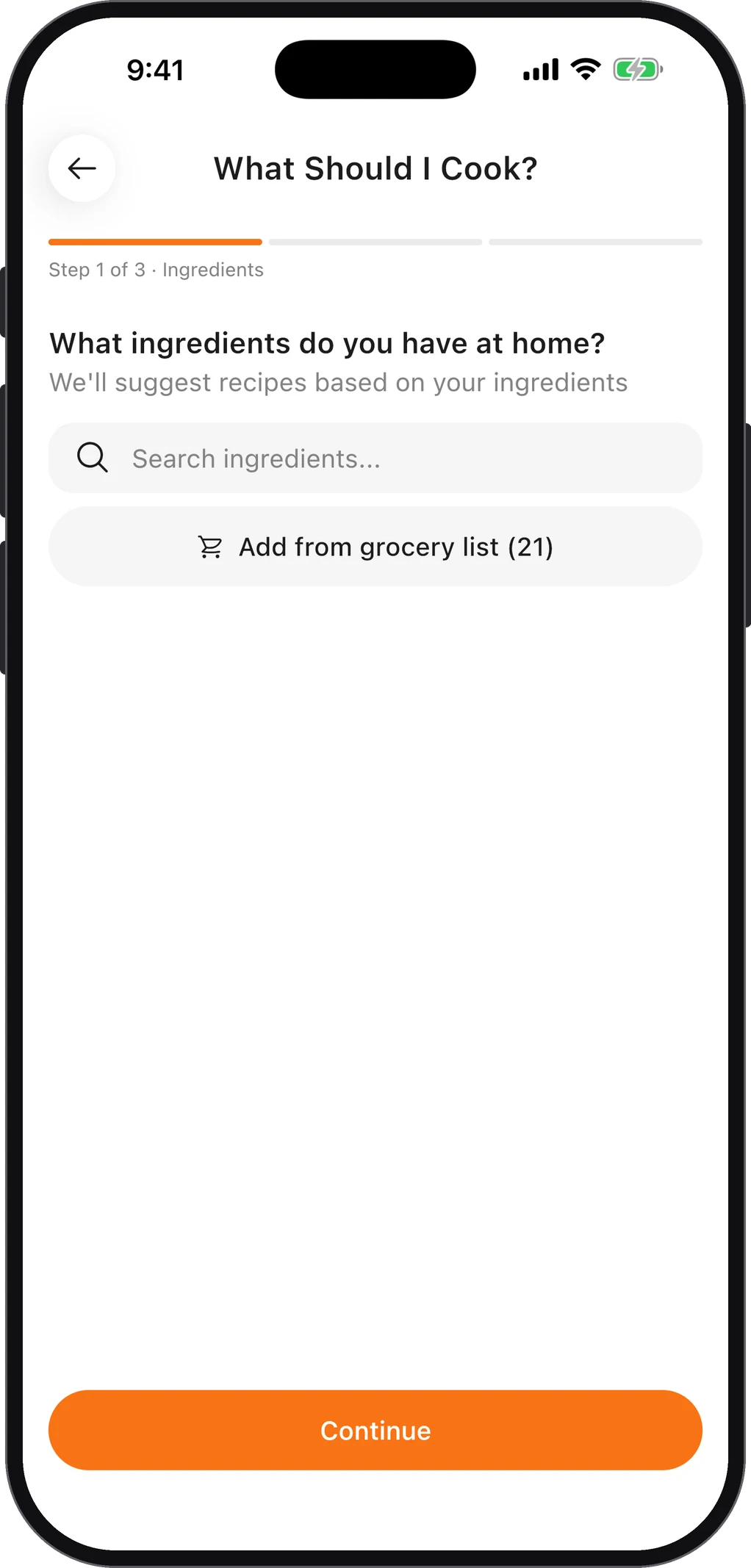
That is what ChefBook’s What Should I Cook? is for. Tick the ingredients you have — the staples from this list plus whatever fresh things need using — choose a meal type, time and difficulty, and you get recipes ranked by how well they match, with a percentage on each. It’s free, and it’s ingredient matching, not AI: every result is a real recipe. The step-by-step guide shows how it works.
Keeping it stocked without thinking about it
- Restock at half, not at empty. When the rice is half gone, it goes on the list.
- Let recipes write the list. When you plan the week’s meals, send the ingredients to your grocery list and cross off the staples you already have — you’ll only buy the gaps.
- Plan one “pantry night” a week. A weekly meal plan with one meal built entirely from staples uses up tins and grains before they sit for a year.
- Oldest at the front. New tins go behind old ones, so you use the oldest first. See how to reduce food waste at home for more of these habits.
Questions people ask
What are the most essential pantry staples?
If you can only keep ten things: pasta, rice, tinned tomatoes, a tin of beans, olive oil, salt, pepper, garlic, onions and eggs. Between them they make dozens of dinners.
How do I build a pantry on a budget?
Add two or three staples per shop instead of buying a full list at once, buy rice, oats and beans in larger bags, and buy spices in small packets. Start with what your regular recipes use.
How long do pantry staples last?
Dried grains and tins keep for a long time; oils, nuts, wholegrain flour and ground spices lose quality faster. Check the dates when you restock and use older items first.
Keep every recipe in one place
ChefBook is free on the App Store and Google Play — save your first recipe today.
phone camera