 ChefBook
Learning how to meal plan on a budget is less about finding the cheapest recipes and more about stopping three leaks: buying things you already have, buying things you will not use, and abandoning the plan mid-week for something delivered. A plan that closes those leaks saves more than any list of “£1 meals”.
Here is a method that works whatever your budget number is.
Step 1: Start from what you already own
Every budget meal plan should begin in the kitchen, not the supermarket. Before choosing a single recipe:
- Check the fridge for anything that needs using in the next three days.
- Check the freezer for one protein or batch dish you forgot about.
- Check the cupboard for open packets: half a bag of pasta, a tin of chickpeas, rice.
Then build the first two meals of the week around those. That is money you already spent; eating it is the cheapest food there is.
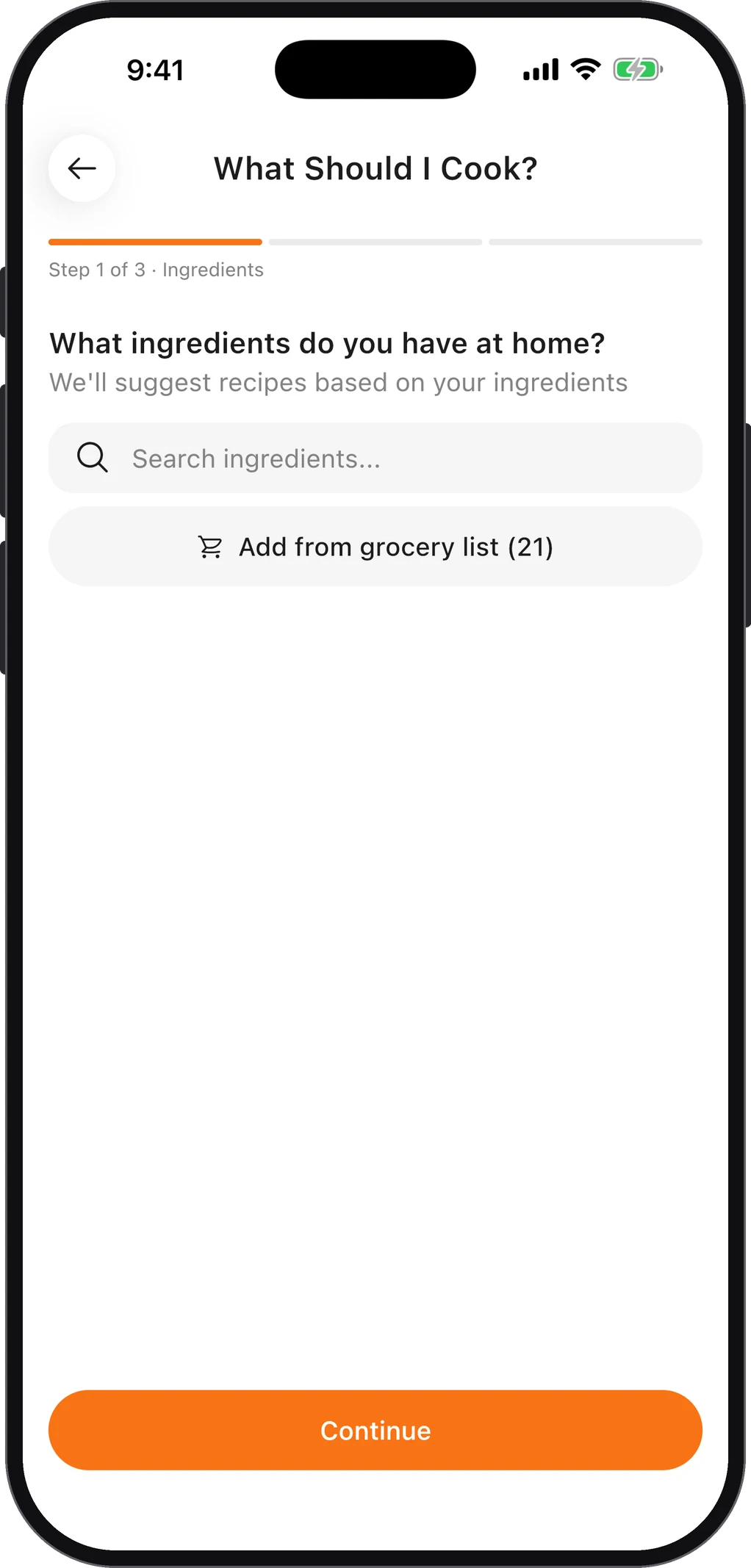
If you are not sure what those odds and ends make, What Should I Cook in ChefBook takes a list of what you have and ranks recipes by ingredient match, so you can see which ones need nothing extra. It is free and it is plain ingredient matching, not AI.
Step 2: Choose recipes that share ingredients
This is the biggest single lever on a budget. Ingredients get wasted when one recipe needs half of something and nothing else that week uses the other half.
Plan in ingredient families:
| Bought once | Used in |
|---|---|
| A bunch of spring onions | Fried rice Monday, omelette Wednesday, noodle soup Friday |
| A tub of yoghurt | Marinade Monday, sauce Tuesday, breakfast all week |
| A whole chicken | Roast Sunday, wraps Monday, stock and soup Tuesday |
| A bag of spinach | Curry Tuesday, pasta Thursday, eggs Saturday |
When you choose recipe two, look at what recipe one leaves behind.
Step 3: Plan five dinners, not seven
A seven-dinner plan ignores real life: leftovers, an invitation, a night too tired to cook. Unused ingredients from the “spare” meals are pure waste.
Plan five dinners and treat the other two as:
- Leftovers night — eat what the week produced.
- Clear-out night — cook from whatever is left, before the next shop.
Step 4: Build cheap meals around a cheap base
Protein is usually the most expensive part of a plate. Budget meal plans stretch it rather than removing it:
- Use cheaper cuts — chicken thighs instead of breasts, mince bulked with lentils.
- Halve the meat and add a pulse — bolognese with half beef, half lentils; chilli with beans.
- Make two meatless nights — eggs, beans, lentils and tofu are among the cheapest proteins in most shops.
- Lean on filling bases — rice, pasta, potatoes, oats and bread carry flavour cheaply.
For a reference point on what a thrifty food budget looks like where you live, the USDA publishes monthly Cost of Food reports for its Thrifty, Low-Cost, Moderate and Liberal food plans.
Step 5: Shop to a list, once
Impulse buys and second trips are where budgets go. The rules:
- Write the list from the plan, combining duplicate ingredients.
- Cross off what you already have (Step 1).
- Shop once a week if you can. Every extra trip is another chance to pick up things not on the list.
- Buy own-brand staples and loose produce in the amount the recipe needs.
Doing this by hand is tedious, which is why people skip it. In ChefBook the meal planner sends every planned ingredient to the grocery list in one tap, grouped by recipe, so you can see exactly why each item is there and drop the ones you already own. Our post on how to make a grocery list covers the manual version.
Step 6: Cook once, eat twice
Double any recipe that freezes well — soups, stews, curries, pasta sauces — and freeze the second half in portions. Next week’s plan then starts with a free dinner. Cooked leftovers keep 3 to 4 days in the fridge according to the cold food storage chart on FoodSafety.gov, so anything you will not eat by then should go in the freezer.
A sample budget meal plan
| Day | Dinner | Uses up |
|---|---|---|
| Sunday | Roast chicken thighs, potatoes, carrots | — |
| Monday | Chicken and spinach curry with rice | Leftover chicken, half the spinach |
| Tuesday | Lentil bolognese (double batch) | Carrots, onion |
| Wednesday | Leftovers | Curry or bolognese |
| Thursday | Spinach and cheese omelette, toast | Spinach, eggs |
| Friday | Clear-out fried rice | Rice, vegetables, any egg |
| Saturday | Bolognese from the freezer | Free dinner |
Five cooking nights, one batch in the freezer, almost nothing left to throw away. For more on stopping waste, see how to reduce food waste at home.
Questions people ask
How do you meal plan on a tight budget?
Start from what is already in your fridge and cupboard, choose recipes that share ingredients, plan five dinners instead of seven, and shop once from a list. Most savings come from wasting less, not from cheaper recipes.
What are the cheapest meals to plan for the week?
Meals built on rice, pasta, potatoes or oats with eggs, beans, lentils or cheaper cuts of meat: fried rice, lentil curry, bean chilli, omelettes, pasta with a vegetable sauce, soup.
How much should a family spend on groceries a week?
It depends on where you live and household size. In the US, the USDA’s monthly Cost of Food reports give reference costs for different budget levels.
Does meal planning really save money?
It usually does, because you buy only what the plan needs and use up what you buy. The plan has to survive the week, so leave room for leftovers.
Keep every recipe in one place
ChefBook is free on the App Store and Google Play — save your first recipe today.
phone camera