 ChefBook
A plan that survives contact with a real week looks boring on paper. That is the point. It takes about twenty minutes to make and it saves you the daily 6pm decision, which is the actual thing draining you.
Why meal plans fail
- Too many new recipes. Seven unfamiliar dinners is seven chances to fail. Two is plenty.
- No slack. Real weeks contain late meetings and bad days. A plan with no gap is a plan that breaks.
- Planning and shopping are separate. You write the plan, then hand-copy ingredients onto a list, and the copying is where it falls apart.
- Leftovers are ignored. Cooking Sunday's chilli twice is not a failure, it is a Tuesday you did not have to think about.
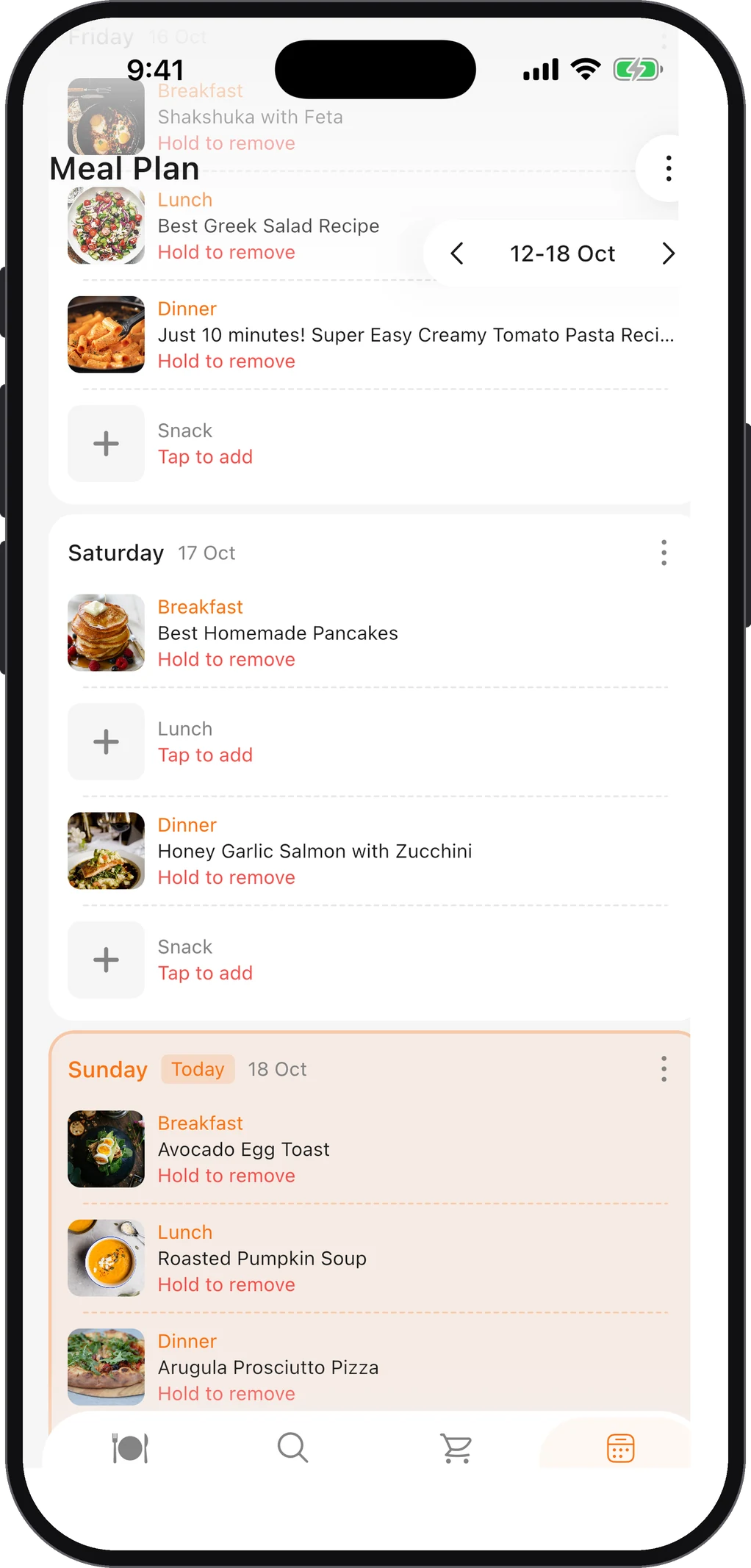
How to do it in ChefBook
- Pick a planning slot. Twenty minutes, same time each week — Sunday morning, Saturday afternoon, whenever. It only sticks if it has a home in the week.
- Open the weekly planner. ChefBook gives you breakfast, lunch, dinner and snack slots for all seven days. Look at the actual week ahead first: which nights are you even home?
- Fill dinners first, and leave gaps. Dinner is the decision that hurts. Plan five, not seven — leave one night for leftovers and one for whatever happens. Search your saved recipes from inside the planner and tap to drop them in.
- Repeat your greatest hits. Use two reliable recipes you have cooked before and one new one. A plan is not a creative exercise; it is a way of not thinking at 6pm.
- Send the whole week to your grocery list. One tap pushes every planned ingredient onto the list, grouped by recipe. This is the step that makes the plan real — no hand-copying, nothing forgotten.
- Shop once, then stop planning. Tick items off as you go around the shop. For the rest of the week, the question "what's for dinner" already has an answer.
Stuck filling the slots? Run What Should I Cook? against what is already in your cupboards and build the plan around that. Planning around what you own beats planning around what you fancy.
How to meal plan for the week with a pen and paper
You do not need an app to start. A sheet of paper or a note on your phone works for the first few weeks:
- Look at the calendar first. Mark the evenings you are out, home late or feeding extra people. Those nights get the fastest dinners, or none at all.
- Write five dinners, not seven. Two you have cooked many times, two easy ones, one new recipe. Leave one night for leftovers and one free.
- Cook once, eat twice. Pick at least one dinner that makes a second meal: a big pot of chilli on Sunday is Tuesday's baked potatoes.
- Check what you already have. Open the fridge and cupboards before you write the list. Use up the half bag of spinach before you buy more.
- Write one shopping list for the whole week, with each ingredient under the meal it is for, so you can see what goes with what.
A sample weekly meal plan
This is what a realistic first week looks like. Notice how little of it is new:
| Day | Dinner | Why it is there |
|---|---|---|
| Sunday | Big pot of chilli | Cooked once, eaten twice |
| Monday | Pasta with a favourite sauce | A dinner you could make half asleep |
| Tuesday | Leftover chilli with baked potatoes | No cooking decision at all |
| Wednesday | The one new recipe | Mid-week, when you still have energy |
| Thursday | Omelette or eggs on toast | The late night at work |
| Friday | Free night | Takeaway, eating out, or whatever is left |
| Saturday | Traybake or stir-fry | Uses up the vegetables before the next shop |
The same grid works whatever you call it — a meal planner, a weekly menu, a dinner rota. In ChefBook it is the weekly planner, with breakfast, lunch, dinner and snack slots for every day; you search your saved recipes from inside the planner and tap to place them. Get ChefBook free to try it on next week.
Turn the plan into the weekly shop
The plan only saves you time if the shopping comes out of it without copying. Done by hand, that means going recipe by recipe and writing every ingredient on the list. In ChefBook, one tap sends a recipe, a day or the whole week's ingredients to the grocery list, grouped by recipe — how a recipe becomes a shopping list explains why grouping matters when a plan changes mid-week.
What good looks like after a month
You will not become someone who batch-cooks fourteen identical containers on a Sunday. You will become someone who knows what Tuesday's dinner is on Sunday, buys roughly the right food once, and throws away noticeably less of it.
That is the whole return: fewer decisions, fewer emergency shops, less waste, less takeaway. It compounds quietly, and it takes twenty minutes a week.
Holidays are the same routine at a bigger scale: the Thanksgiving dinner planner and the Christmas dinner planner count the week back from the meal itself.
Questions people ask
How do you plan meals for the week efficiently?
Plan at the same time every week, start from the calendar, write five dinners rather than seven, repeat recipes you know, and make one shopping list for all of it. Most of the time goes on the list, which is why sending the plan straight to a grocery list saves the most.
What should a weekly meal plan include?
Start with dinners only, a leftovers night and a free night. Add breakfasts and lunches once dinners are a habit — they are usually the same few things on repeat.
Is there a free weekly meal planner app?
Yes. ChefBook is free to download, and the weekly planner and grocery list are part of the free app; importing recipes is free up to a weekly allowance. It runs on iPhone, iPad and Android. Download ChefBook free.
Do this in about a minute
ChefBook is free on the App Store and Google Play — save your first recipe today.
phone camera