 ChefBook
Short answer: sometimes very good, sometimes quietly wrong, and you can’t always tell which from reading it. AI chatbots such as ChatGPT write recipes by predicting what a plausible recipe looks like. Most of the time plausible and correct overlap. The trouble is the cases where they don’t, because an AI recipe looks just as confident either way.
Here’s where AI recipes are genuinely useful, where they tend to fail, and how to use them without ruining dinner.
Where AI recipes are genuinely useful
Ideas from odd combinations
“What can I make with leeks, chicken thighs and crème fraîche?” is exactly the kind of question AI handles well. It knows that combination from thousands of similar dishes and will suggest a sensible direction, such as a creamy braise, a pie filling or a pasta sauce, in seconds.
Substitutions and quick questions
“Can I use Greek yogurt instead of sour cream?” “What can I use instead of shallots?” These are well-trodden questions with well-known answers, and AI is usually right about them. It’s also good at explaining why a step exists, like why you rest meat or salt aubergine.
Rewriting and adapting
AI is handy for turning a messy recipe into clean numbered steps, converting cups to grams as a rough guide, or making a dish vegetarian as a starting point you then check.
Where AI recipes tend to go wrong
Quantities and ratios
Language models are not calculators. They can produce a sauce with too little liquid for the pasta, a marinade that’s mostly salt, or a “serves 4” that would feed two. Each line looks reasonable on its own; the problem only shows up when the dish comes together.
Baking
Baking is chemistry. The ratios of flour, fat, sugar, eggs, liquid and leavening have to work together, and small changes matter. An AI cake recipe can read perfectly and still be dense, dry or sunken, because one ratio drifted. For baking, a recipe that someone has actually tested is worth far more than a generated one.
Food safety
This is the one to take seriously. Cooking temperatures, storage times and canning or preserving methods should never come from a guess. If an AI recipe gives a temperature for chicken, pork or fish, check it against an official source such as FoodSafety.gov’s safe minimum internal temperatures chart, and use a thermometer. Never rely on an AI-generated method for home canning; follow a tested, official canning guide instead.
Invented details
AI sometimes adds steps or ingredients that don’t belong, or presents a dish as “traditional” when it isn’t. That’s harmless in a weeknight stir-fry and embarrassing when you’re cooking a family’s regional dish for someone who grew up with it.
How to use AI recipes safely
- Use AI for the idea, a tested recipe for the method. Let the chatbot suggest “chicken and leek pie”, then cook from a well-reviewed written recipe for it.
- Read the whole recipe before you start. Check that the liquid, salt and cooking times make sense together.
- Be most careful with baking and preserving. Prefer tested recipes from bakers and official sources.
- Check every safety number. Temperatures and storage times come from food safety authorities, not a chatbot.
- Save the version that worked. If you adjusted an AI recipe and it came out well, write down what you actually did, so next time you’re cooking your recipe, not a new guess.
Where ChefBook uses AI, and where it doesn’t
ChefBook is clear about this, because it matters:
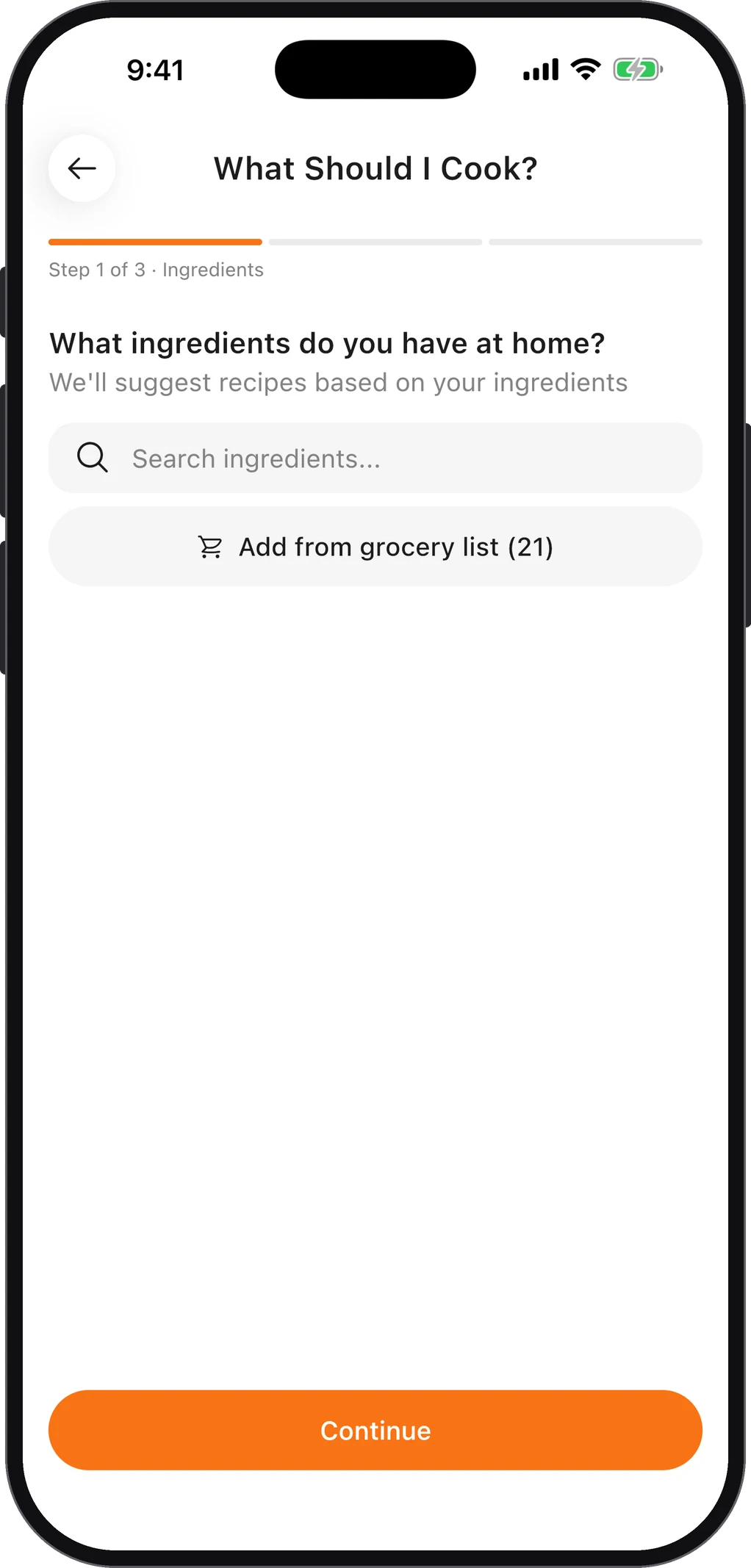
- What Should I Cook is not AI. It matches the ingredients you have against real recipes, from your own library and from the community, and ranks them by an ingredient match percentage. Nothing is invented, and it’s free. See what can I cook with the ingredients I have and what should I make for dinner.
- AI Completion is AI. Start a recipe with a title and a few ingredients, and it suggests the rest, such as instructions. It’s useful for writing up a dish you already know how to make. Read the result before you cook, as you would with any AI text.
- Ask Chef is AI. It’s a chat about the recipe in front of you: “what can I use instead of feta?”, “can I make this the day before?”. It’s a Premium feature.
- Importing a recipe keeps the real recipe. When you import from a website, ChefBook saves the recipe that was published there, so a tested recipe stays the tested recipe.
Free accounts get 5 uses of Premium features a week; Premium is unlimited.
Questions people ask
Can ChatGPT create a recipe from ingredients I have?
Yes, and it’s often a good source of ideas. Treat the result as a suggestion: check the quantities, cooking times and safety temperatures before you cook. If you’d rather start from recipes that already exist, an ingredient-matching tool like What Should I Cook finds real recipes that use what you have.
Are AI-generated recipes safe?
The food itself isn’t the risk; wrong instructions are. Check temperatures and storage advice against official food safety sources, and don’t use AI methods for canning or preserving.
Is ChatGPT good for meal planning?
It can sketch a week of ideas quickly. The weak spots are quantities, shopping lists that miss items, and plans that don’t match what you actually like to cook. Planning from a library of recipes you already trust avoids most of that. See weekly meal planning for beginners.
Keep every recipe in one place
ChefBook is free on the App Store and Google Play — save your first recipe today.
phone camera