 ChefBook
Meal prep for beginners goes wrong in a predictable way. You watch a video, buy a stack of containers, spend four hours on Sunday cooking one enormous batch, and by Wednesday you cannot face another portion of it. The problem was never the cooking. It was trying to prep a whole week of identical meals before you knew what you would actually eat.
This guide takes a smaller route: prep components, not finished meals, and start with two or three days rather than seven.
What meal prep actually is (and the three kinds)
“Meal prep” covers three quite different habits. Knowing which one you are doing saves a lot of frustration.
| Type | What you do | Good for |
|---|---|---|
| Full-meal prep | Cook complete meals and portion them into boxes | Lunches at work, strict calorie goals |
| Batch cooking | Cook one or two big dishes (chilli, soup, curry) and eat them over several days or freeze them | Families, cold weather, busy weeks |
| Ingredient prep | Wash, chop, marinate and pre-cook the parts, then assemble fresh meals on the night | Anyone who gets bored of leftovers |
For a beginner, ingredient prep is the easiest to stick with. You still cook every evening, but it takes 15 minutes instead of 45, and nothing tastes like day four.
Meal prep for beginners: the 90-minute Sunday
Here is a first session you can finish in about an hour and a half.
- Cook one grain — a big pot of rice, quinoa or pasta. It becomes the base for three different meals.
- Cook one protein two ways — roast a tray of chicken thighs, or cook a pot of lentils. Season half plainly so it can go in any direction later.
- Roast one tray of vegetables — whatever is cheap: peppers, onions, squash, carrots.
- Wash and chop the fresh things — salad leaves, herbs, raw vegetables for snacking. Store leaves with a dry paper towel in the box.
- Make one sauce — a jar of vinaigrette, yoghurt-garlic sauce or peanut dressing. Sauce is what makes the same chicken feel like a different dinner.
That is it. Five jobs, mostly running in parallel in the oven and on the hob.
Turning components into different meals
The trick that makes meal prep sustainable is that the same building blocks finish in different directions:
- Monday: rice bowl — chicken, roasted vegetables, yoghurt sauce.
- Tuesday: fried rice — leftover rice in a hot pan with an egg, the vegetables and soy sauce.
- Wednesday: wraps — chicken, raw vegetables and salad in a flatbread.
- Thursday: something fresh, cooked on the night, using whatever is left.
You are cooking four dinners from one session, but none of them repeats.
How long does meal prep last in the fridge?
This is the question beginners should ask first, because it decides how many days you can prep ahead. According to the US government’s cold food storage chart on FoodSafety.gov, cooked leftovers, cooked meat and poultry, and soups and stews keep 3 to 4 days in a fridge at 40°F (4°C) or below.
That is why prepping for seven days in one go rarely works. A practical rhythm is:
- Prep on Sunday for Monday to Wednesday.
- Freeze anything meant for Thursday onwards, or do a 20-minute top-up on Wednesday night.
The USDA notes that food kept frozen at 0°F (-18°C) stays safe indefinitely, although quality drops over time, so label boxes with the date. Cool cooked food and get it into the fridge within two hours.
The containers you actually need
You do not need a 40-piece set. For a first month:
- 4–6 medium glass or BPA-free boxes with lids, for components.
- 2 large boxes for grains and roasted vegetables.
- A few small jars for sauces and dressings.
- Freezer bags for soups and batch dishes — they freeze flat and thaw faster.
Buy more only once you know which sizes you keep reaching for.
Plan the week before you shop
Most failed prep sessions start in the supermarket, buying ingredients for meals that were never really decided. Ten minutes of planning fixes that:
- Pick three dinners for the week, not seven. Leave room for leftovers and one night out.
- Write down every ingredient, then combine duplicates — if two recipes use an onion, you need two onions, not “onions” twice on two lists.
- Check the cupboard before you go.
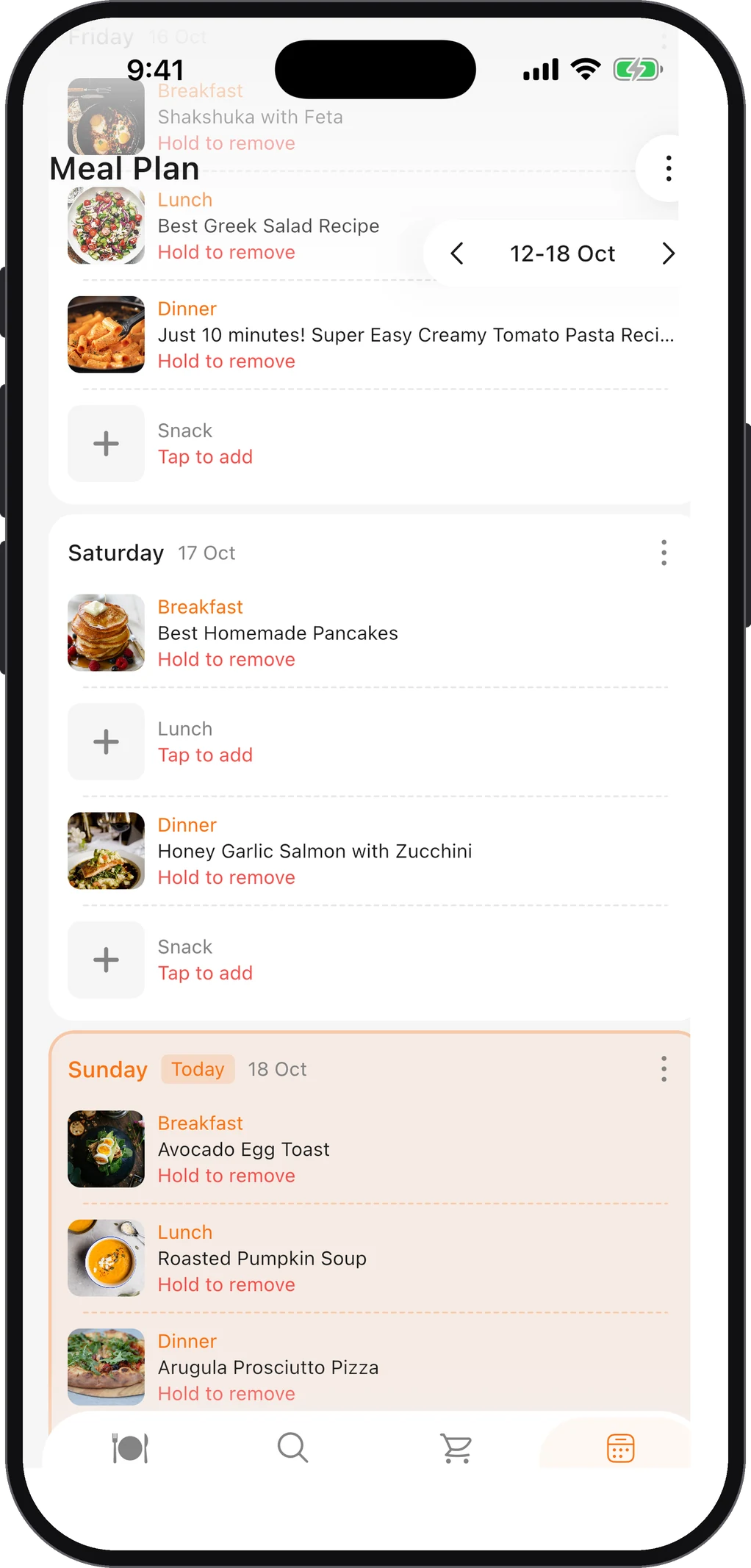
If your recipes are already in ChefBook, the weekly meal planner does steps 2 and 3 for you: drop recipes into the day slots and one tap sends every planned ingredient to the grocery list, grouped by recipe. The recipe-to-grocery-list guide walks through it.
Five beginner mistakes to skip
- Prepping seven days at once. Three or four is the realistic ceiling for the fridge.
- Dressing salads in advance. Keep dressing in a jar until you eat.
- Prepping food you don’t already like. Week one is not the time to start eating quinoa.
- Ignoring breakfast. Overnight oats or a tray of egg muffins is the easiest prep win there is.
- No plan for leftovers. Have one “fridge clear-out” meal on Thursday. If you are stuck, What Should I Cook ranks recipes by how much of what’s left they use.
If you are cooking on a tight budget, the same approach pairs well with a budget meal plan; if you live alone, see meal planning for one.
Questions people ask
How do I start meal prepping as a beginner?
Pick two or three dinners, cook one grain, one protein and one tray of vegetables on Sunday, and assemble different meals from them on Monday to Wednesday. Increase the number of days only once that feels easy.
How many days in advance can you meal prep?
Three to four days for cooked food kept in the fridge at 40°F (4°C) or below, per FoodSafety.gov. Freeze anything you plan to eat later in the week.
Is meal prep cheaper?
Usually, because you buy to a list and waste less. The savings come from planning and using up what you buy, not from the containers.
What is the easiest meal to prep?
Batch dishes that improve overnight: chilli, curry, soup, bolognese. They reheat well, freeze well and need almost no assembly on the night.
Keep every recipe in one place
ChefBook is free on the App Store and Google Play — save your first recipe today.
phone camera