 ChefBook
Most recipes on the internet simply do not publish nutrition — and the ones that do rarely tell you what happens when you cook it for two instead of six.
Why calorie-counting a recipe is such a pain
- Recipes and trackers live in different apps. Copying between them is manual, every time.
- Per-serving is the number you want. Total calories for a tray of lasagne is not useful information.
- Scaling breaks it. Change the servings and every number needs redoing.
- It is too late to matter. Finding out after you have eaten it is not a decision, it is a receipt.
How to do it in ChefBook
- Open any recipe. Imported from a blog, scanned from a card, or written by you — it does not matter where it came from.
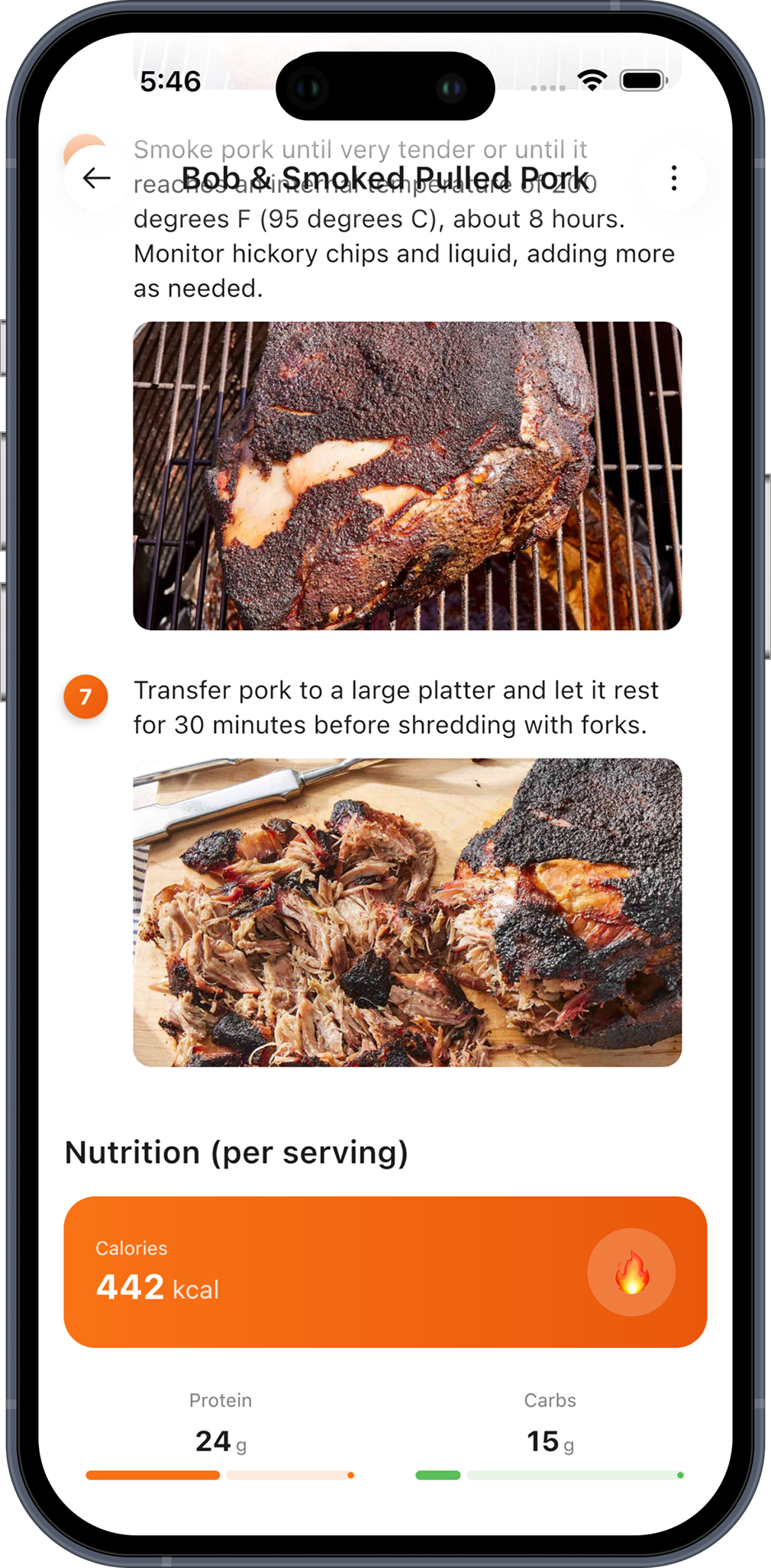
- Look at the nutrition panel. ChefBook shows calories, protein, carbs, fats, fibre and sugar per serving, so you can see what a plate of it actually costs you.
- Set the servings honestly. Adjust the serving count to how the food will really be divided. Per-serving numbers are only meaningful if the serving is real.
- Check it before you commit. This is the point of the whole exercise: the number is useful before you cook, when you can still choose the other recipe or change the portion.
- Fill gaps with AI. Writing your own recipe, or importing one with nothing declared? AI Completion can estimate the nutrition alongside the instructions, so even a hand-written family recipe gets a number.
Estimated nutrition is an estimate — brands, cuts and how much oil actually went in the pan all move the number. Use it to compare recipes and steer portions, not as a clinical measurement.
Use it to plan, not to punish
The most useful way to use nutrition information is at the planning stage, not the eating stage. When you build your week in the meal planner, you can see the shape of it — where the heavy meals are, whether the protein is there, whether Thursday needs to be lighter because Wednesday is a roast.
Adjusting a plan on Sunday is easy. Regretting a meal on Thursday achieves nothing.
Do this in about a minute
ChefBook is free on the App Store and Google Play — import your first recipe today.